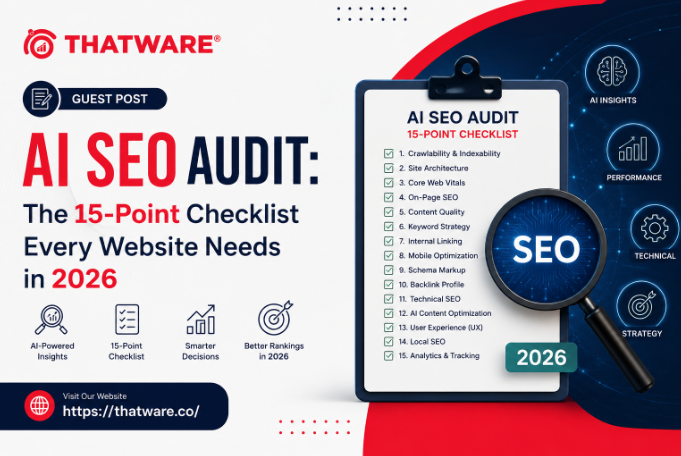
An AI-informed SEO audit is different in a specific and practically important way: it doesn’t just identify issues, it prioritizes them by expected ranking impact. The list doesn’t run from critical to minor based on error severity. It runs from highest projected organic traffic improvement to lowest.
This 15-point framework is a starting structure for how a comprehensive AI SEO audit should be organized and what it should examine.
Technical Audit Points
1. Crawl Budget Efficiency How effectively is Google allocating its crawl budget across your site? For sites with large page counts, unoptimized crawl architecture can result in important pages being crawled infrequently or not at all. AI analysis identifies which site sections are consuming crawl budget without commensurate organic value.
2. Indexation Health Which pages are indexed vs. excluded, and is the indexed page set optimized? Many sites have significant indexation issues — thin pages consuming index budget, valuable pages blocked by misconfigured robots directives.
3. Core Web Vitals by Page Template CWV improvements matter differently across page types. ML prioritization identifies which template improvements produce the highest aggregate ranking impact rather than optimizing fastest pages further.
4. JavaScript Rendering For JavaScript-heavy sites, crawlability and rendering verification is critical. Googlebot’s rendering queue adds lag, and content not rendered at crawl time is effectively invisible.
5. Structured Data Coverage and Accuracy Schema implementation quality varies significantly across page types. AI-powered audits assess structured data against the entity relationships present in content, identifying where markup is missing, incorrect, or failing to represent the content’s full semantic value.
Content Audit Points
6. Topical Authority Mapping AI SEO audit services evaluate content not just page by page but as a cluster architecture — identifying which topic areas have comprehensive coverage and which have critical gaps that limit competitive positioning.
7. Semantic Entity Coverage Are key entities and their relationships represented throughout the content? Entity analysis identifies where content mentions topics without establishing their relationships — a significant semantic optimization opportunity.
8. Intent Alignment Does each high-priority page match the dominant intent for its target query? Intent misalignment is a common and often invisible cause of ranking underperformance — pages about something slightly different from what searchers actually need.
9. Content Freshness and Decay AI monitoring identifies pages showing early decay signals — gradual ranking and traffic decline that precedes visible performance drops. These pages are candidates for refresh before they lose significant organic value.
10. Thin Content and Duplication Content quality below the competitive threshold for target queries, and duplication that fragments authority across multiple pages, both reduce organic performance and are identified through AI content analysis.
Authority Audit Points
11. Backlink Quality and Relevance Not all links contribute equally to ranking for specific queries. AI SEO pricing / packages for link analysis typically include contextual relevance scoring — identifying which links in the profile are supporting ranking performance and which are providing minimal topical signal.
12. Entity Recognition Is your brand recognized as an entity in Google’s knowledge graph? Strong entity recognition improves EEAT signals and supports ranking performance across the full content inventory.
13. Competitive Link Gap Analysis What links do competing pages have that yours don’t? AI-powered gap analysis identifies link acquisition opportunities with highest relevance to your target query landscape.
Monitoring Audit Points
14. Anomaly Detection Coverage Does the site have adequate monitoring to detect ranking anomalies, indexation changes, and technical issues early? The audit should identify monitoring gaps that leave performance problems undiscovered for extended periods.
15. Attribution and Reporting Quality Are organic performance metrics being measured with sufficient granularity to identify what’s working? Weak attribution makes optimization decisions effectively blind — and is itself an audit finding with practical remediation.
The value of this audit framework isn’t in the checklist — it’s in the AI prioritization layer that tells you which of these fifteen areas, for your specific site in your specific competitive context, represents the highest-impact work to start with. That’s what separates AI SEO from running a list.